A Good Book And A Sense Of Place
A Good Book And A Sense Of Place
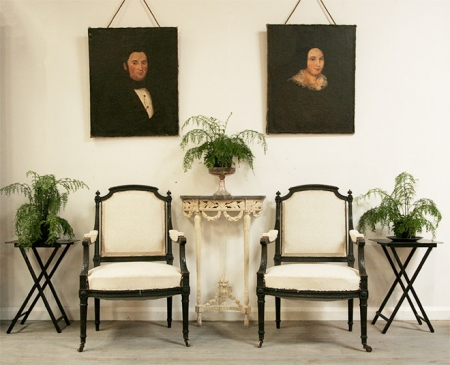
At times New Zealand feels a very long way from Europe. I have been known to suffer pangs of guilt about relocating European antiques to such a far flung and incongruous destination. Often these beautiful pieces seem somewhat displaced, like cultural orphans abandoned in a foreign and lonely setting - their grace and time worn beauty still intact but sadly out of context. “They are inanimate objects“ Simon regularly reminds me. I know, but I can’t help feeling that I have somehow stripped them of their meaning and relevance.
A European sensibility runs murkily through my veins like some sort of mysterious genetic memory yet it has frequently been accompanied by a certain sense of unease. My Euro - centric fascination appeared to conflict with the general perception of what it meant to be a kiwi. The dog-eared puzzle of New Zealand identity has on the whole sought to reject European influence in order to establish it’s own distinctive voice - like a teenager rebelliously packing their bags and leaving home to chase an autonomous future away from the meddling of parents.
Just as New Zealand once found the need to reject Europe I similarly decided that I needed to reject New Zealand in order to freely enjoy the wealth of European art and literature which I felt such an affinity for - that somehow the two were mutually exclusive. I spent my own teenage years devising plans to get to Europe and raging against New Zealand because I had decided that it had no history, no depth, no gravitas.
The years have eroded this once unrelenting conviction of course, but yet again I stand corrected. I have recently read the novel Wulf by Hamish Clayton. This exquisite piece of writing so deftly and authentically weaves European myth into the story of New Zealand. This book describes the history, the depth and the gravitas. The historical merging of two cultures is understood, respected and conveyed with both horror and beauty but primarily with sensitivity. The descriptions of nature are raw and vivid - as if the words were daubs of paint, their layered application gives visual texture to an almost primal yet familiar landscape. Within these pages I glean a sense of belonging - a subtle permission to feel at home. The gleam of gilt or the serpentine curve of a cabriole leg would not feel out of place amongst these "wild green rooms" these "black green trees”.
Thankfully modern New Zealand is much less inclined to dissect, define and prescribe the concept of “kiwiness” but it is always a joy to discover yet another reason to further bury my teenage grudge and affirm context for the vast collection of European antiques that now call New Zealand home. This fine book provides many such reasons.